You brush twice a day, you rinse after meals, and yet there always seems to be something stuck around your brackets. Maybe your gums bleed a little when you brush, or they look puffier than they used to.
This is a common frustration for anyone wearing braces. Brackets and wires create plenty of spots where plaque can hide, and a toothbrush alone cannot always reach them. That is where a professional scale and polish comes in.
Here’s why cleaning matters more once you have braces, what changes when your dentist does a scale and polish, and the habits that keep your teeth healthy between visits.
What Is a Scale and Polish?
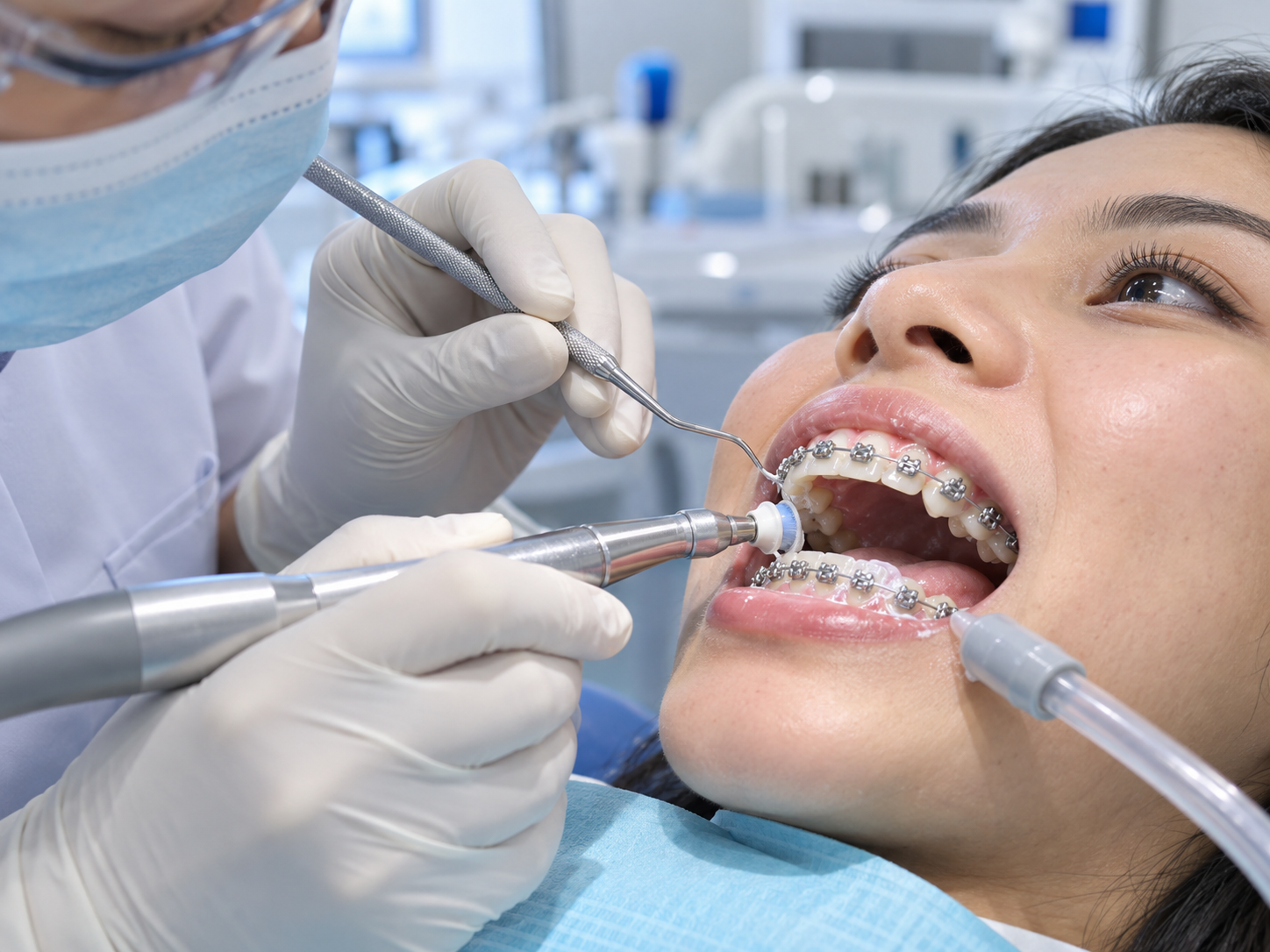
A scale and polish is a professional dental cleaning that removes plaque and hardened tartar from your teeth and along the gumline. Scaling clears away the buildup, while polishing smooths the tooth surfaces and removes surface stains. For braces wearers, it helps protect both the teeth and gums throughout treatment.
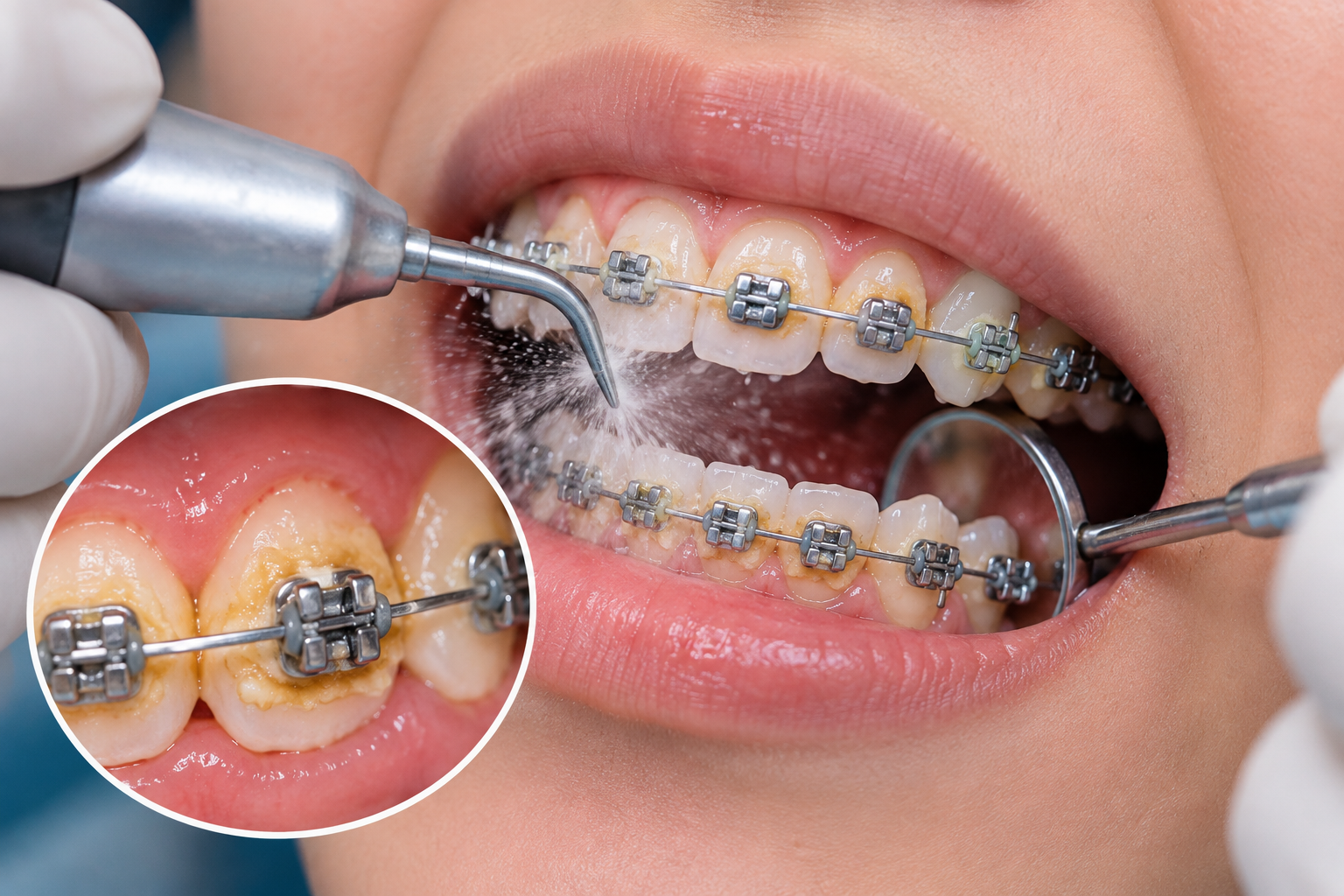
The two steps do different jobs. Scaling uses small instruments, often an ultrasonic scaler that vibrates and sprays water, to break up tartar that brushing cannot shift. Once tartar forms, only a dentist can remove it.
Polishing comes next. A gentle paste is used to smooth the surfaces, which makes it harder for plaque to cling on again. Done regularly, teeth scaling keeps tartar from building up to the point where your gums start to suffer.
Why Plaque Builds Up Faster Around Braces
Braces are excellent at moving teeth into place, but they are not easy to clean around. Understanding why helps explain the extra care they need.
More places for plaque to hide
Every bracket, wire and elastic creates new edges and corners. Food particles get trapped in these spots, especially after sticky or starchy meals. Plaque then builds up quickly in areas your toothbrush struggles to reach.
The gaps between the brackets and the gumline are particularly tricky. This is often where tartar starts to form first.
What happens when plaque is left behind
Plaque that sits around brackets for too long can weaken the enamel underneath. This often shows up as chalky white spots around the edges of each bracket. These marks usually become visible only when the braces come off, which can be disappointing after months of treatment.
This is more common than many people realise. A 2015 meta-analysis found that nearly half of patients developed new white spot lesions during fixed orthodontic treatment.
Plaque can also irritate the gums, making them red, swollen or prone to bleeding. Left unchecked, it may lead to cavities and gum problems that can complicate your orthodontic treatment. Good cleaning habits matter from day one of braces treatment, not just in the final months.
Scaling With Braces: What the Dentist Does Differently
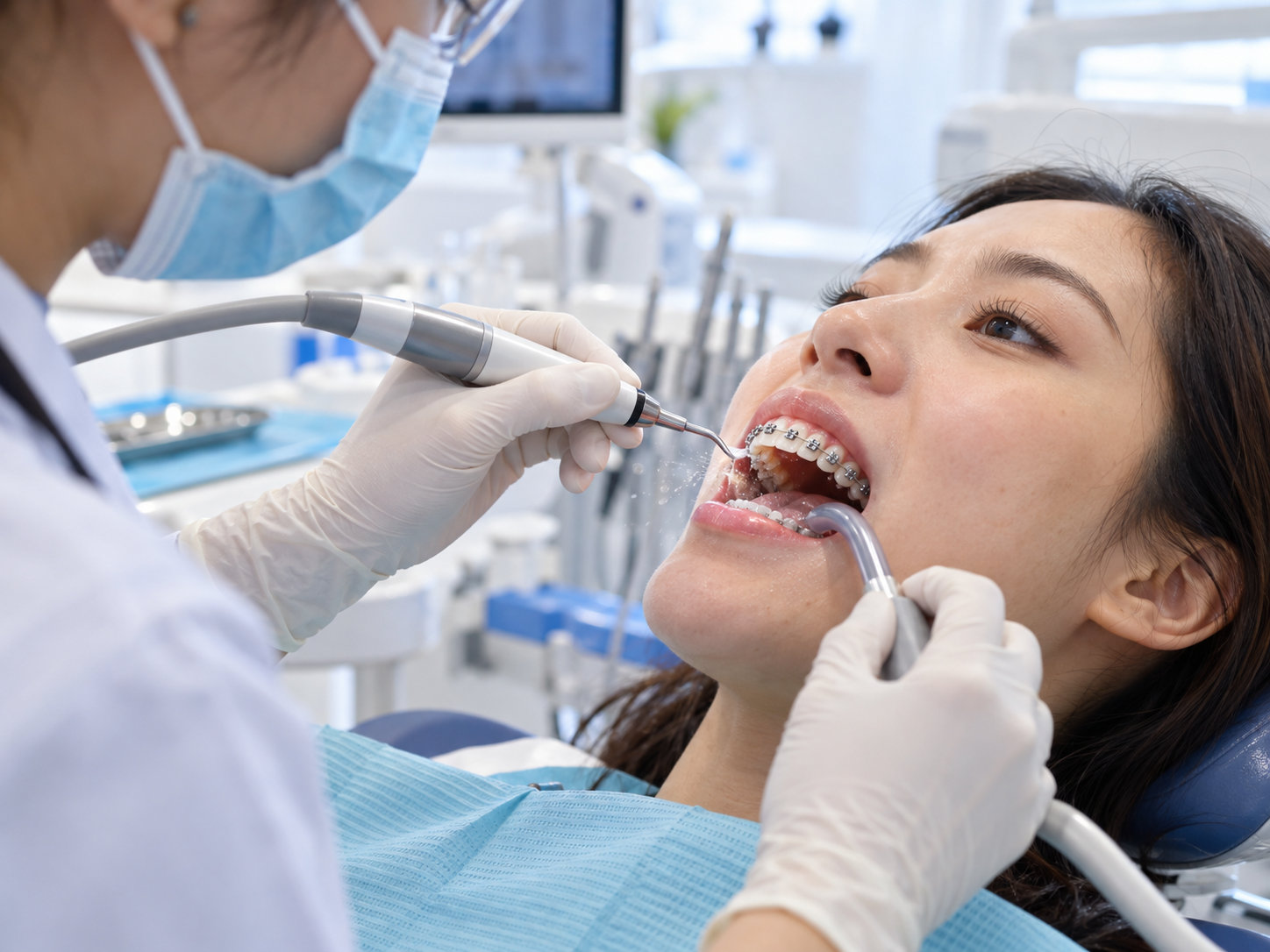
A scale and polish for someone with braces follows the same basic idea, but it takes more precision. Your dentist has to clean thoroughly without disturbing the appliance.
Working carefully around brackets and wires
Your dentist will work slowly around each bracket and under the wire, where plaque tends to collect. Smaller instruments and careful angles help reach tight spaces without loosening anything.
Scaling is generally safe for braces when done carefully by a dentist. If a bracket does feel loose afterwards, your dentist can advise on the next step.
Checking for early warning signs
A cleaning visit is also a chance for your dentist to look closely at your teeth. They can spot early white patches, inflamed gums or areas you tend to miss when brushing. Catching these early gives you time to adjust your routine before problems get worse.
What the visit feels like
Most patients feel some vibration and water spray, along with mild pressure around the brackets. If your gums are already inflamed, you may notice some tenderness or light bleeding. This usually settles within a day or two as the gums recover.
Coordinating with your orthodontic visits
Some patients find it helpful to book a scale and polish around their braces adjustment appointments. Your dentist can advise on the best timing for you.
How Often Should You Do Teeth Scaling With Braces?
For most people, a scale and polish every six months is a common guideline. This helps keep tartar under control and allows your dentist to check your oral health regularly.
Braces change that picture. Because plaque builds up faster, your dentist may recommend a cleaning more often, sometimes every three to four months. The right schedule depends on your gums, your cleaning habits and how your teeth respond during treatment.
It is worth keeping your regular dental checkups even while you see an orthodontist. Orthodontic visits focus on moving your teeth, while a scale and polish focuses on keeping them clean and healthy. Both play a part in a good result.
How to Clean Teeth With Braces at Home
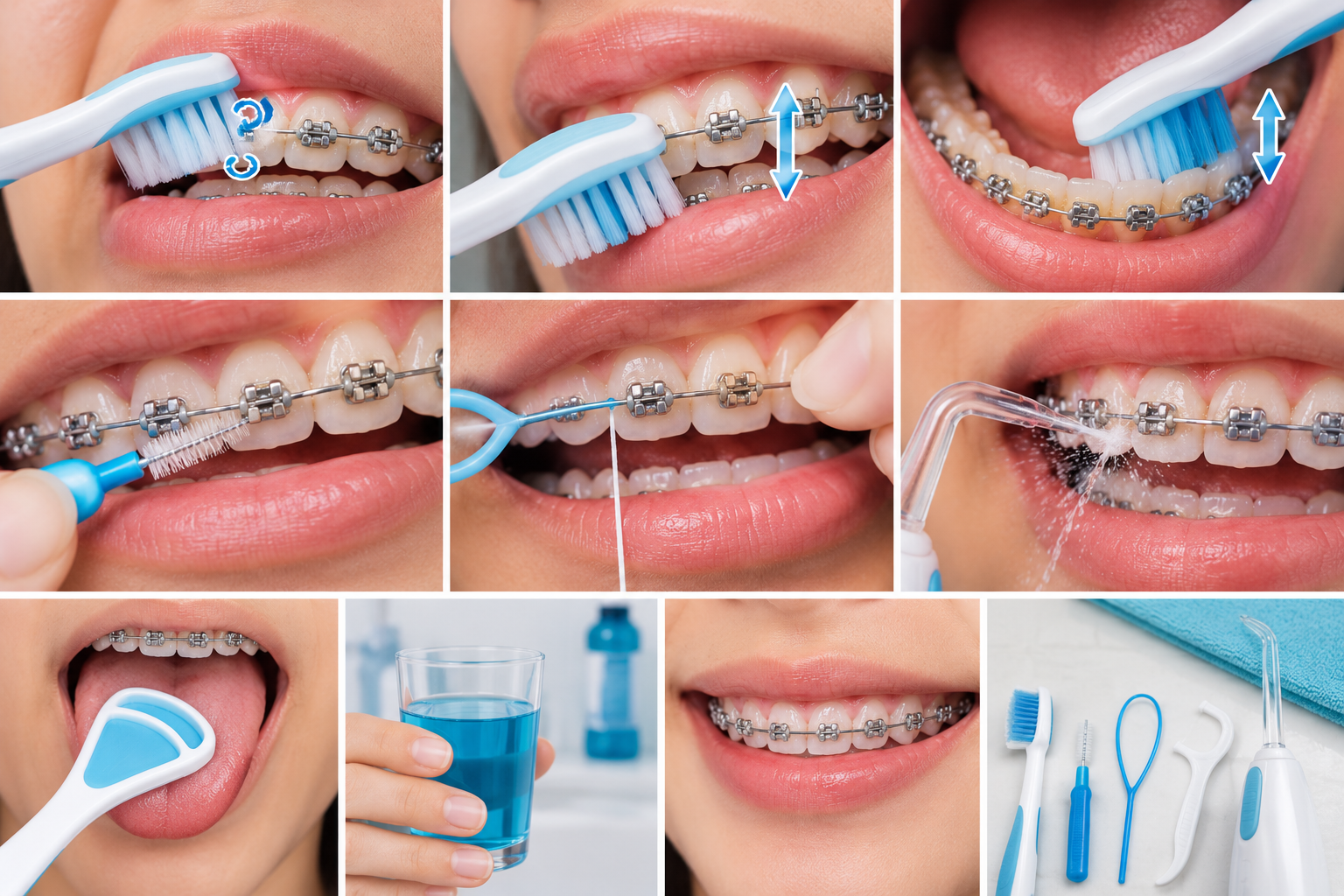
Professional cleaning works best alongside a solid daily routine. What you do at home between visits makes the biggest difference.
Brush with the right technique
Use a soft-bristled toothbrush and brush after every meal where possible. Angle the bristles towards the gumline, then clean above and below each bracket. Take your time, as brushing with braces usually takes longer than before.
Clean between the brackets
Interdental brushes are small brushes that slip under the wire and between the brackets. Floss threaders or a water flosser can also help you reach between your teeth. Try to make this part of your nightly routine. Pay extra attention to the back teeth, as molar bands and brackets there are easy to overlook.
How to clean braces after meals
Malaysian favourites like nasi lemak, satay, kuaci and sticky kuih can leave bits lodged around your braces. After eating, rinse with water and check your teeth in the mirror. Carry a travel toothbrush if you eat out often.
It also helps to cut hard foods into smaller pieces. Avoid chewing on ice or very sticky sweets, which can bend wires or loosen brackets.
Use fluoride to protect your enamel
Brush with a fluoride toothpaste to help strengthen the enamel around your brackets. Your dentist may also suggest a fluoride mouthwash if you are prone to white spots.
Think ahead to after treatment too. Once your braces come off, you will likely wear a retainer. Rinse it daily and brush it gently with cool water, as plaque can build up on retainers as well.
Signs You May Need a Scale and Polish Sooner
Some signs suggest plaque is getting the upper hand. Watch out for gums that bleed easily, persistent bad breath, or a yellowish crust along the gumline. Gums that look swollen around the brackets may also mean plaque has been building up for some time.
White or chalky patches around your brackets are another warning sign. If you notice any of these, a visit to a Kepong dentist can help get your oral health back on track before your braces come off.