After months of tightening appointments and avoiding sticky food, getting your braces removed is a moment worth celebrating. Your teeth finally look the way you hoped. What many patients do not realise is that the work is not quite over yet, because how you care for your teeth in the months that follow plays a big part in keeping that result. This is where a retainer after braces comes in.
In this guide, we cover why teeth tend to move after treatment, the different retainers your dentist may recommend, and what a typical wear schedule looks like.
Why wear retainers after braces?
Braces move teeth by applying gentle, steady pressure over many months. When the brackets come off, your teeth are in the right place, but the structures holding them have not fully caught up. That is why your dentist will ask you to start wearing a retainer straight away.
Gum fibres try to pull teeth back
Each tooth is held in place by tiny elastic fibres that connect it to the gum and bone. These fibres stretch during braces treatment and, for a while, they “remember” where your teeth used to be. Like a rubber band, they can pull teeth back towards their old positions if nothing is holding them steady.
The bone around your teeth needs time to settle
As teeth move, the bone around them breaks down on one side and rebuilds on the other. Right after braces, this new bone is still soft and reorganising. The first few months are generally when teeth are most likely to move, which is why consistent retainer wear matters most at this stage.
Teeth keep moving naturally throughout life
Even years after treatment, teeth do not stay perfectly still. Chewing, ageing, changes in the jaw and habits such as teeth grinding or tongue thrusting can all nudge teeth over time. This natural movement happens to everyone, whether or not they had braces, and it is a big reason retainers are often recommended long after the bone has settled.
Types of retainers after braces
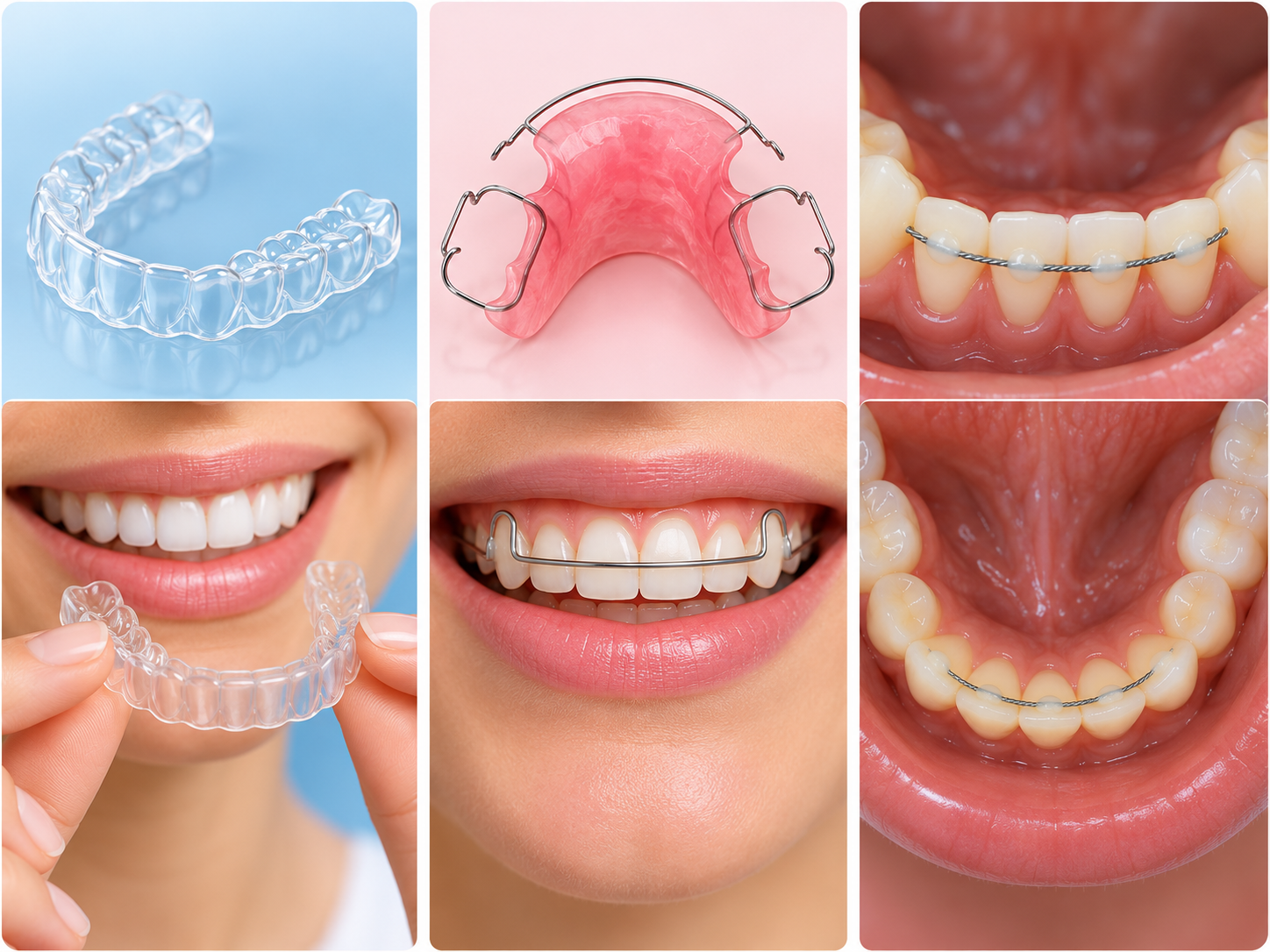
There are two broad groups: removable retainers you can take out, and fixed retainers bonded to your teeth. Your dentist will recommend a type based on how your teeth moved, your bite and your lifestyle. Some patients are given a combination, such as a fixed retainer on the lower teeth and a removable one on the upper teeth.
Clear removable retainers
Also known as Essix or vacuum-formed retainers, these are thin, transparent plastic trays moulded to the exact shape of your teeth. They are hard to notice when worn and are easy to take out for eating and brushing. The trade-off is that they rely on you to wear them as instructed, they can crack or warp if exposed to heat, and they may need replacing every so often.
Hawley retainers
The Hawley retainer is the classic design: a thin metal wire across the front teeth attached to an acrylic plate that sits against the roof of your mouth or behind your lower teeth. It is durable and can sometimes be adjusted slightly by your dentist. It is more visible than a clear retainer and may affect your speech for the first few days while you get used to it.
Fixed (bonded) retainers
A fixed retainer is a thin wire glued to the back of your front teeth, usually the lower ones. Because it stays in all the time, you do not have to remember to wear it, and no one can see it when you smile. It does make flossing a little trickier, so you will need floss threaders or interdental brushes, and the wire should be checked at your regular dental visits in case it loosens or breaks.
Clear removable | Hawley | Fixed (bonded) | |
Visibility | Almost invisible | Wire visible on front teeth | Hidden behind teeth |
Removable | Yes | Yes | No |
Relies on daily habit | Yes | Yes | No |
Cleaning | Brush tray gently, rinse with cool water | Brush tray gently, rinse with cool water | Brush and floss around wire with threaders |
Durability | Can crack or warp with heat | Sturdy, adjustable | Long-lasting, but wire can debond |
How long do you have to wear retainers after braces?
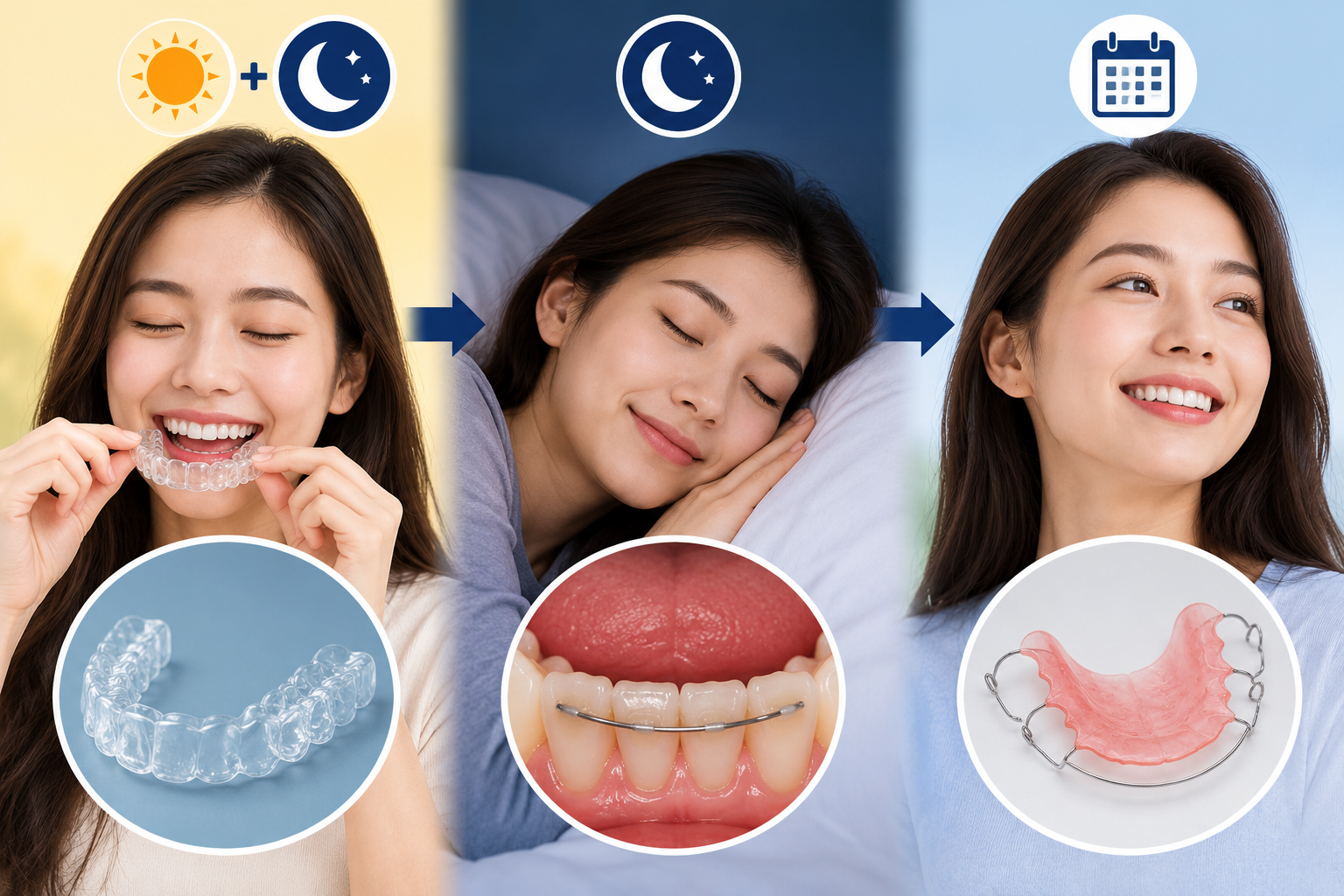
There is no single answer that fits everyone, because your schedule depends on how much your teeth moved, your age, your bite and the type of retainer you have. That said, most retention plans follow a similar pattern.
The first few months: full-time wear
Right after your braces come off, you will usually be asked to wear a removable retainer almost all day and night, taking it out only to eat, drink anything other than plain water, and clean your teeth. This is the period when teeth are most prone to shifting, so sticking to your schedule here makes the biggest difference.
After that: night-time wear
Once your dentist is happy that your teeth are stable, you will typically move to wearing your retainer only while sleeping. Your dentist will tell you when it is safe to make this switch, based on how your teeth look and how your retainer fits at check-ups.
Why many dentists now recommend long-term retention
Because teeth keep moving naturally throughout life, many dentists now advise wearing a retainer at night for as long as you want your teeth to stay straight. Over time, some patients may be able to reduce this to a few nights a week, but this should only be done on your dentist’s advice. A simple way to check is how your retainer feels: if it fits easily, your teeth are holding well. If it feels tight, your teeth may have started to move.
If you have a fixed retainer, it does the work for you around the clock, and it can stay in place for many years as long as it remains intact and your gums stay healthy.
What happens if you stop wearing your retainer?
Skipping your retainer, even for a few weeks, can allow teeth to start drifting. Small gaps may reopen, front teeth may begin to overlap again, or your bite may feel slightly different. Minor shifting can sometimes be guided back if you resume wearing your retainer quickly, but larger changes may mean your retainer no longer fits and you need further orthodontic treatment to correct them. If you are thinking about restarting your braces journey, our braces treatment in Kepong page explains the options available.
What to do if your retainer is lost, broken or feels tight
Retainers do get lost, dropped or accidentally thrown away in a tissue at lunch. If this happens, contact your dentist as soon as possible rather than waiting until your next check-up. The longer you go without one, the more chance your teeth have to move.
If your removable retainer has cracked, stop wearing it and arrange a replacement, as a broken edge can irritate your gums and may not hold your teeth properly. If your fixed retainer feels loose or a part of the wire has come away, avoid picking at it and book a visit so it can be repaired. A retainer that suddenly feels tight is a sign your teeth may have shifted, so do not force it in; let your dentist check the fit first.
Caring for your retainer
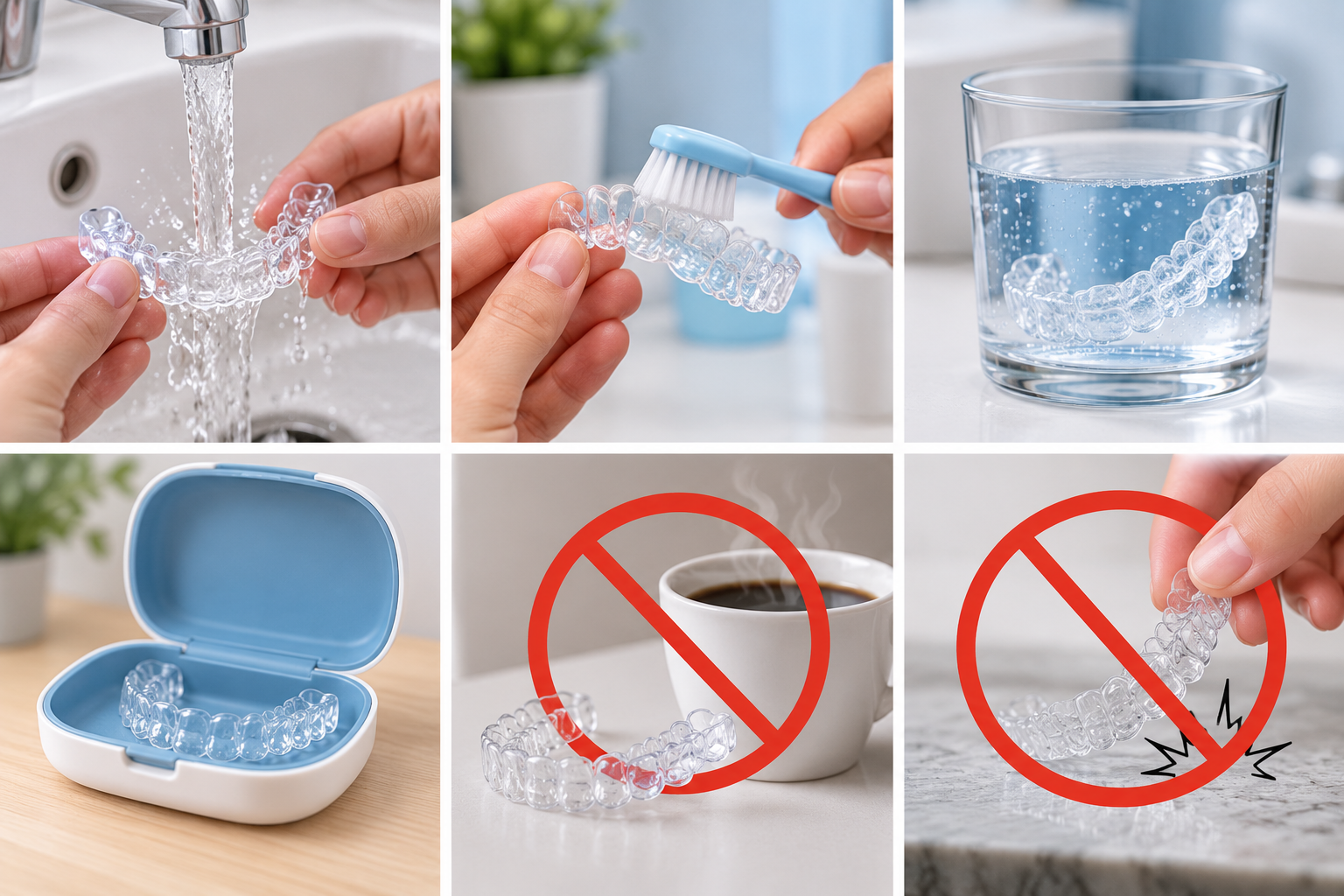
A well-kept retainer lasts longer and stays more comfortable. Steps to care for your retainer:
- Clean removable retainers daily by brushing gently with a soft toothbrush and rinsing with cool water.
- Avoid hot water, which can warp plastic, and avoid harsh toothpaste, which can scratch the surface and trap bacteria.
- Always keep your retainer in its case when it is not in your mouth, out of reach of pets, and away from car dashboards or other hot spots
- For fixed retainers, brush carefully along the wire and use floss threaders or interdental brushes to clean between the teeth.
Bring your retainer to every dental visit so your dentist can check its fit and condition.